
When people watch an Olympic final, their eyes are naturally drawn to the windmill churn of arms or the explosive white water kicked up by feet. It is easy to assume that swimming fast, or swimming safely, is primarily about powerful arms and tireless legs.
In professional coaching, however, we know that true aquatic skill is built from the inside out.
At SwimEasy, our teaching philosophy is grounded in structured, progressive practice in swimming. We do not simply toss children into the deep end and ask them to swim full strokes. We build strokes methodically using a proven pedagogical framework known as BLABT:
- B – Body Position
- L – Leg Action
- A – Arm Action
- B – Breathing
- T – Timing
Notice what sits right at the very beginning of that sequence: Body Position. You cannot build an efficient stroke on a broken foundation. Before legs kick, before arms pull, and before timing connects the movement, a swimmer must master their relationship with buoyancy, balance, and drag.
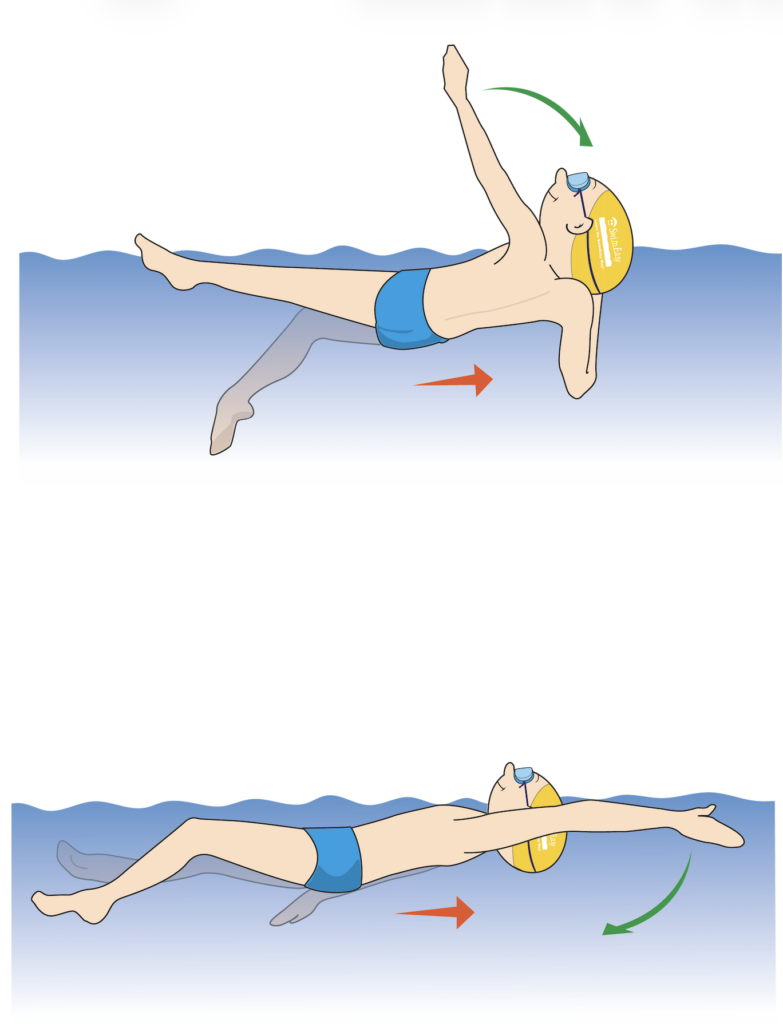
It All Starts With the Float: Conquering Frontal Drag
Water is roughly 800 times denser than air. Moving through it means fighting constant resistance.
When a beginner learns to swim, their natural instinct when upright is to look forward, which causes their hips and legs to drop straight toward the pool bottom. This transforms the body from a sleek torpedo into a vertical wall, creating massive frontal drag. Every kick becomes an exhausting attempt to stay afloat rather than moving forward.
This is why progressive practice begins with basic floating:
- The Foundation of Buoyancy: Relaxing the neck, pressing the chest down into the water’s natural buoyancy, and engaging the core.
- The Horizontal Line: Aligning the head, spine, and hips directly at the surface.
- Effortless Propulsion: Once a swimmer can hold a balanced, streamlined line without tensing up, every subsequent skill, from kicking to arm recover; requires a fraction of the muscular energy.
From a water safety perspective, a high, relaxed body position is what allows a swimmer to conserve oxygen and remain calm. From a competitive perspective, horizontal alignment is the razor-thin margin between standing on the podium or finishing off the pace.
How the Sport Evolves: The Sara Curtis Backstroke Breakthrough
Body position is so foundational that even at the highest pinnacle of world aquatics, coaches and sports scientists continue to innovate ways to optimise it.
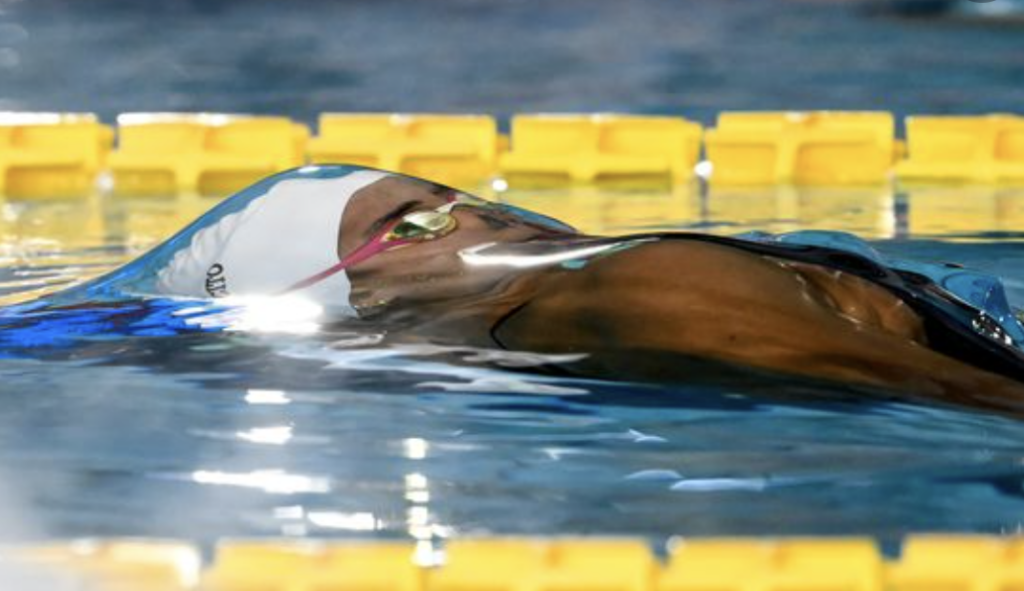
Take one of the most fascinating stroke evolutions in recent memory: Italian teenager Sara Curtis, who smashed the women’s 50-metre backstroke world record last month.
In traditional backstroke, swimmers are taught to keep their face clear of the water, looking upward while resting the back of the head on the surface. Curtis and her coaching team turned conventional wisdom on its head: she submerged her head back and under the surface during the race.
By allowing her head to sit deeper in the water, Curtis dramatically reduced wave resistance and lifted her hips and torso into a completely flat, ultra-hydrodynamic plane.
Now, would we ever teach a beginner or early-stage improver to keep their head fully underwater while learning backstroke? Of course not. Beginners need clear breathing, strong visual orientation, and comfort at the surface.
However, Curtis’s world record powerfully illustrates a timeless truth: water physics never changes. Whether you are five years old learning a push-and-glide at a SwimEasy pool in Edinburgh or a world-record holder sprinting for gold, body position dictates your efficiency.
The BLABT Journey: Step-by-Step Progression
To ensure no step is missed, our curriculum across Edinburgh, Glasgow, and Falkirk systematically advances swimmers through each tier:
1. Body Position (The Platform)
Glides, star floats, streamline arrows, and sculling drills establish a flat, stable platform on both front and back.
2. Legs (The Stabiliser)
Kicking is not just for propulsion; it keeps the lower body elevated and balances the rotational forces created by the upper body.
3. Arms (The Propeller)
Once the platform and kick are stable, arms are introduced to anchor into the water and lever the body forward with clean, high-elbow mechanics.
4. Breathing (The Rhythm)
Breathing is integrated without disrupting the streamlined body line. turning the head smoothly along the water’s surface rather than lifting the chin.
5. Timing (The Symphony)
Finally, propulsion, balance, and respiration are locked into a seamless, rhythmic whole where no energy is wasted.
Why Nothing Is Left to Chance
When children skip progressive steps, they develop technical compensations—bobbing heads, splayed kicks, and dropped hips—that cap their stamina and hinder long-term progress.
By honouring progressive practice in swimming, we ensure every child builds true water confidence, bulletproof safety habits, and the technical mechanics to swim with speed, elegance, and ease.
Come see why Nobody Does it Better and Nothing is Left to Chance!